Ted Lasso Episode 5 - V is For Vulnerability Lessons in Mindfulness and Resilience
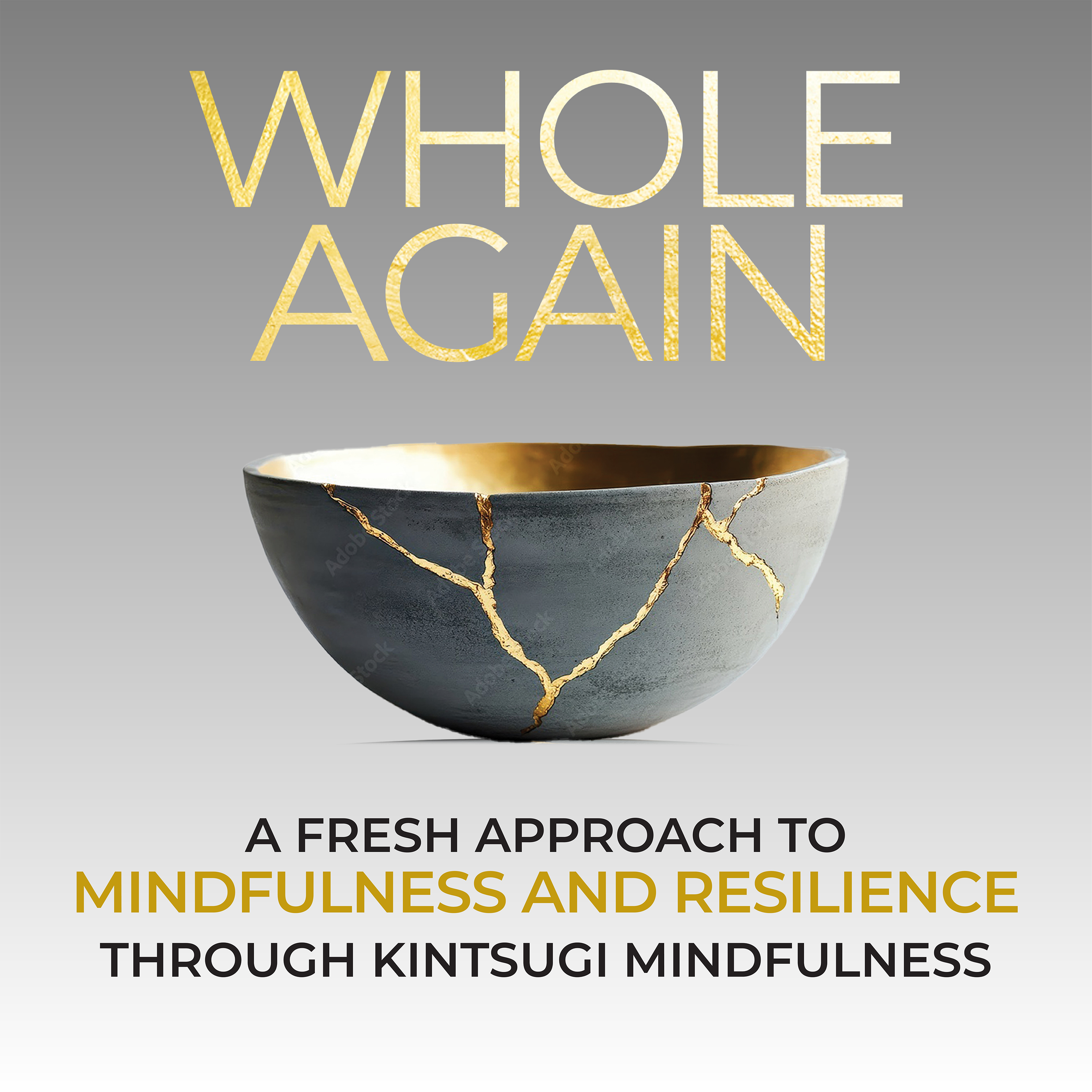
The Whole Again Podcast: Mindfulness and Resilience through Kinstugi Wisdom airs every Monday, Wednesday and Friday with Pause Breathe Reflect Microdose Meditations, Growth Mindset and Mindfulness Tips, to help us transform our scars into healing and resilience.
And between May and October, I'm sharing a new series I'm calling: A Perfectly Imperfect Union. It's about connecting with every day folks as they reflect on America at 250. Conversations will air every Tuesday, Thursday and Saturday.
-------
What if the fastest way to build trust with your team is to let them see you at your most embarrassed?
That's the question at the center of this week's Ted Lasso recap, where Michael unpacks episode five of the show's final season through the lens of vulnerability.
When the Lady Greyhounds fall apart in the first half against Chelsea, Alice calls the team an embarrassment and Ted, instead of deflecting or defending, leans right into the word. He opens up to his players about his divorce, his dating life, and why he eats hot dogs alone, reframing embarrassment not as a fatal flaw but as a defense mechanism that keeps us small.
Press play to hear how one halftime hot dog story became a masterclass in leadership, trust, and the golden repair of our own imperfections.
You can now download my Pause Breathe Reflect App with Microdose EQ for FREE on Apple’s App Store or Google Play. Discover how to spend less time on your phone and more time on things that bring you joy. Also, find the support you need to navigate today’s uncertainty with more calm and grace.
Receive a FREE copy of my book: “My Last Bad Day Shift.”
We can also connect on LinkedIn.
Subscribe to be sure you don’t miss any of the micro-meditations, wellness tips, and guidance that I publish every Monday, Wednesday, and Friday at 7:11 am.
<p> Through one lens, you could say episode five is all about relationships or relationship drama or kerfuffles. We see it with Roy and Keeley, Rebecca and her mate, and Beard and his ex-partner. It all ties back to vulnerability. But in this recap, I wanna focus in on the Lady Greyhounds, Ted, and Alice. If you saw episode four, you know the Lady Greyhounds are playing Chelsea.</p>
<p></p>
<p>It's a classic David versus Goliath story, and in the first half, well, the Lady Greyhounds, it's almost like they didn't show up for the match. Chelsea is up, and Alice is, as they say in Boston, wickedly pissed off. She calls the team an embarrassment, and Ted being Ted, in his folksy charm and wisdom, he doesn't push back on the word embarrassment.</p>
<p></p>
<p>He actually leans right into it. He goes back to that first scene in the episode where two of his players took a photo of him eating a hot dog by himself, and he uses the moment during halftime to open up and share more about himself, to be vulnerable, to let them know that indeed, like all of us, he's perfectly imperfect.</p>
<p></p>
<p>He talks about being divorced and his dating life and why he chooses to eat a hot dog by himself. As you watch the episode, you'll hear the reason. He told the team that when he first saw the photo, it was embarrassing But then he reframes embarrassment not as a fatal flaw, but a useless emotion. The fear of embarrassment, the fear of failure, of looking foolish in front of others, they're all one and the same.</p>
<p></p>
<p>They're all defense mechanisms, and like all defense mechanisms, they only serve us by keeping us small. We never live up to our potential if we let those defense mechanisms run the day, or in this particular case, run the match. As Ted leans in and diffuses the power of embarrassment, we can see Alice in parallel building up her body armor, building up her walls.</p>
<p></p>
<p>She, as I like to say, has a few rocks in her backpack. She sees the failure of the team as her failure. She calls them an embarrassment, which is probably something she's projecting onto herself, all due to that conversation that she's having with herself. The thing is, is that when leaders are afraid of looking bad, whether we're talking about the game on the pitch or in a corporation or in politics or community life, when leaders are afraid to look bad, they build brittle, defensive cultures.</p>
<p></p>
<p>And we can all see it. We can see it pretty clearly when the body armor is on and the walls are up. You know that person is just trying to protect something. But I say that intellectually. Emotionally, it's still so difficult when we're interacting with that type of person. We want our leaders to be open and, in an appropriate way, to be vulnerable, not in a TMI way.</p>
<p></p>
<p>When we do it right as leaders or as people to one another, we build trust, and when we have trust, we can make so many things possible. Here is the truth that this episode brings forward, and we can really apply it to our own lives. That's the whole meaning behind this series, is take the lessons in each episode that Ted shares, along with the other cast of characters, and see how we can weave it into our lives so we can create a more meaningful life and really step into that person we're becoming.</p>
<p></p>
<p>And I've seen this through my corporate executive career and when I go into companies to speak. You cannot push back, you cannot innovate, you can't grow, you can't do any of those if you're not willing to be embarrassed to a degree Vulnerability is the price of admission if you really wanna make things better.</p>
<p></p>
<p>So if you're wondering, "Hey Michael, how does this fit into a mindfulness practice?" Well, I am glad you asked. Mindfulness, as you might know, and at its core, is the practice of non-judgmental awareness, and this ties back to Jon Kabat-Zinn's definition of mindfulness: paying attention on purpose in the present moment, non-judgmentally.</p>
<p></p>
<p>It's our ability to sit in the present moment, which is a lot easier said than done, and witness what's happening within us without immediately succumbing to our natural fight-flight reaction. And when it comes to embarrassment or vulnerability, it's putting up our body armor or potentially running away.</p>
<p></p>
<p>When we feel embarrassment creeping in, we can actually feel it in the body. It could be that hot sensation in our chest. We might blush. We might get a little warm. We start to sweat. We might have a desire just to turn away or maybe even run away, and sometimes we wanna point the finger in a different direction.</p>
<p></p>
<p>In other words, we'll blame someone else for what's happening. Our ego wants to protect us, so it will do things like telling us to run away or to blame someone else or put up our body armor as a way to stay small so no one will notice us, and we can avoid the risk or the pain of embarrassment. By practicing mindfulness, by pausing, breathing, and reflecting in these moments, which gives us the ability to change the conversation we're having with ourselves in these moments, so we can respond rather than react.</p>
<p></p>
<p>It helps us develop that resilience to stand in the storm, to stand in it, much like Ted did. He didn't run away from it. He leaned into the whole concept or feeling of embarrassment. And when we do that, now there's a chance for potential growth. I should say, because we've seen this play out in our greater society, vulnerability isn't about blurting out our deepest secrets to every stranger on the internet.</p>
<p></p>
<p>There is something in the mindfulness space, in the Eightfold Path per Buddha, called right speech So we have to be wise in terms of what we say, how we say it, and when we say it. Ted didn't open up to LinkedIn or Instagram. He simply opened up to his team. So when we do have a willingness to be vulnerable, it's important to be aware of the audience, the situation, and how we say what we wanna say.</p>
<p></p>
<p>So as you watch episode five, my invitation to you is look at it through the lens of vulnerability. With every episode, there are plenty of storylines, but there's a tie-in, and last week we talked about trust. So vulnerability and trust go hand in glove, and I'll be the first one to say practicing vulnerability is really hard to do.</p>
<p></p>
<p>So we start small. We take micro moments, almost like those micro doses of pause, breathe, reflect. We take these little micro moments where it feels safe to be vulnerable. Again, right environment, right audience. And when we start small, we can get better at this, and over time we might feel more comfortable being more open to a larger audience.</p>
<p></p>
<p>So this is our opportunity, the lesson from episode number five. How can we practice being a bit more vulnerable and opening up to the riches of embarrassment Because when we stop fearing the risk of looking foolish, we open ourselves up to a world of possibilities. This is how we step into more meaning in our life.</p>
<p></p>
<p>Because through vulnerability and not being worried about looking foolish, because we've all been there, and we will all be there again in the future, we develop deeper connections. And our social capital, these relationships, they drive a meaningful life. We also lead in a different way, in a genuine, and an overused word, but authentic leadership approach.</p>
<p></p>
<p>There's greater trust, and with greater trust, as I've mentioned, we can do more things together. We can go faster, and we can also develop true resilience because we begin to trust ourselves. We begin to change that conversation we're having with ourselves, and that changes every conversation that we have with everybody else.</p>
<p></p>
<p>In so many ways, this episode connects back to our Kintsugi spirit on this podcast. Instead of hiding away from our cracks and our scars and our blemishes, we highlight them, and they become symbols of our strength and resilience. So as you go forward, ask yourself, "Where am I keeping myself tight in a bud just to avoid feeling embarrassed?</p>
<p></p>
<p>And what might happen if I let myself blossom instead?" Those two questions are related to episode five. You'll know after you watch.</p>
<p></p>
<p>And as always, thanks for being here. Thanks for listening. I hope you're checking out my other series, A Perfectly Imperfect Union, where I'm talking to everyday folks about their reflections on America at year 250. We'll have another episode for you tomorrow. But until then, remember to celebrate your scars as golden symbols of your strength and resilience, and don't forget to have fun storming the castle.</p>
<p></p>
<p>And if you wish to learn more about creating beautiful ripples and how to prevent a bad moment from turning into a bad day, please visit my website, michaelobrienshift.com, and sign up for my newsletter called The Ripple Effect. And join us each Monday, Wednesday, and Friday here at Whole Again, and discover how you can heal, grow, and become more resilient, and celebrate our scars as golden symbols of strength and resilience.</p>
<p></p>
<p>Until then, remember, you can always come back to your breath. You've got this, and we've got you.</p>
 Apple Podcasts
 Castbox
 Castro
 Goodpods
 Moon FM
 Overcast
 Pocket Casts
 Podbean
 Podcast Addict
 Podcast Republic
 Spotify