Ted Lasso Episode 4 - The Policy of Trust
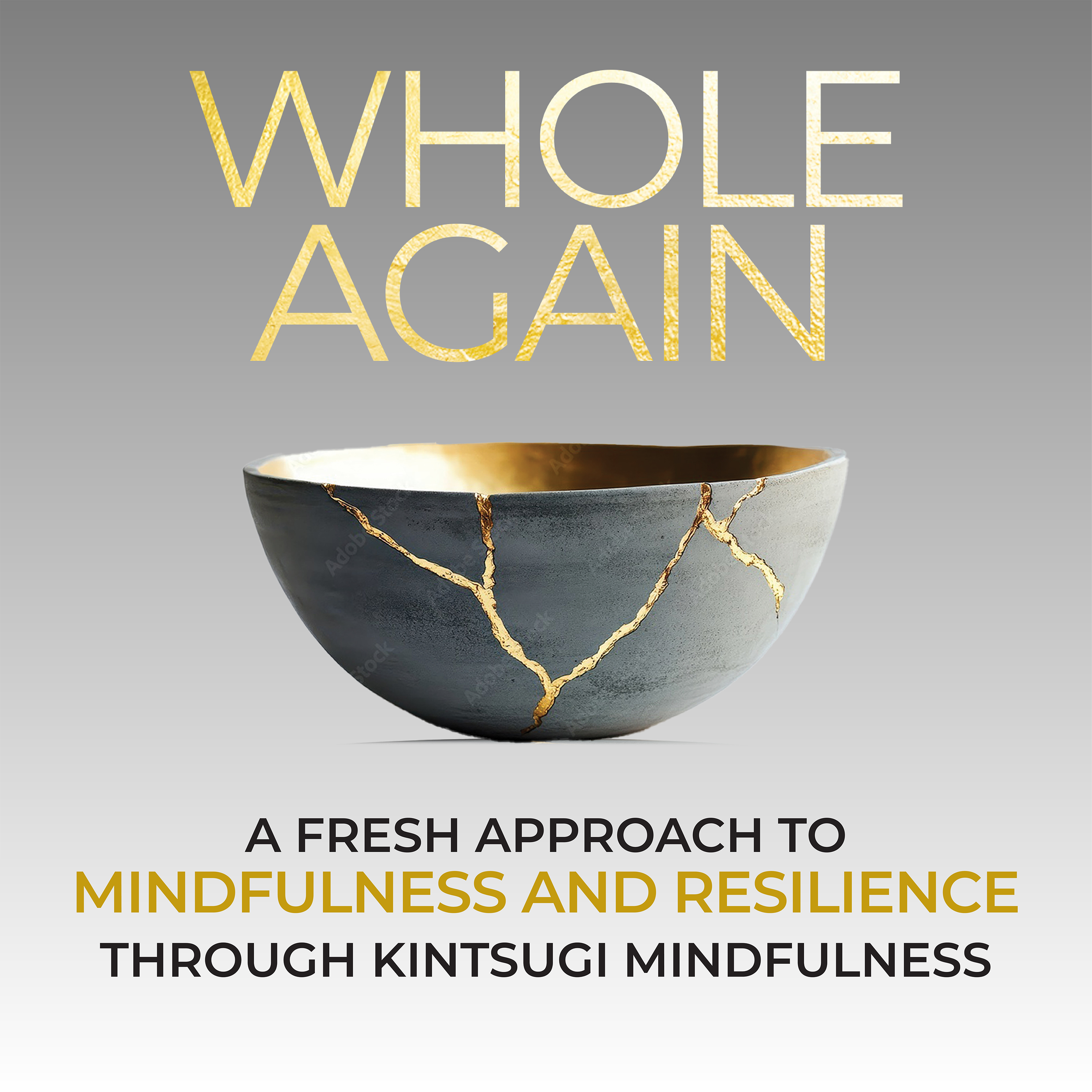
The Whole Again Podcast: Mindfulness and Resilience through Kinstugi Wisdom airs every Monday, Wednesday and Friday with Pause Breathe Reflect Microdose Meditations, Growth Mindset and Mindfulness Tips, to help us transform our scars into healing and resilience.
And between May and October, I'm sharing a new series I'm calling: A Perfectly Imperfect Union. It's about connecting with every day folks as they reflect on America at 250. Conversations will air every Tuesday, Thursday and Saturday.
-------
Can a team of guarded strangers ever really trust each other?
In this installment of Whole Again's Ted Lasso series, I dig into what's really holding the Lady Greyhounds back. It's not talent. It's not effort. It's trust.
As Dr. Fieldstone puts it: "A team is simply a collection of guarded strangers until they believe they are safe to fail in front of one another."
And trust gets built in reps, in the "figurative gym," in tiny unscripted moments.
Michael turns the episode into four practices you can start using today:
- Recognize your control mechanisms as survival tactics
- Offer up micro-moments that create psychological safety for someone else
- Practice collective responsibility over blame
- Anchor yourself in self-trust
Watch (or rewatch) Episode 4 through the lens of trust.
What's one small, unscripted moment when someone did something that made you trust them more?
Drop it in the comments and share this episode with your favorite Ted Lasso fan.
You can now download my Pause Breathe Reflect App with Microdose EQ for FREE on Apple’s App Store or Google Play. Discover how to spend less time on your phone and more time on things that bring you joy. Also, find the support you need to navigate today’s uncertainty with more calm and grace.
Receive a FREE copy of my book: “My Last Bad Day Shift.”
We can also connect on LinkedIn.
Subscribe to be sure you don’t miss any of the micro-meditations, wellness tips, and guidance that I publish every Monday, Wednesday, and Friday at 7:11 am.
<p> Hey there, it's Michael. Welcome to Whole Again, the show that's here in support of the person you're becoming and a meaningful life. And if you caught the last two Wednesdays, you know I'm doing a special series on Ted Lasso Season 4, and we're up to episode number four, which also happens to be my favorite number.</p>
<p></p>
<p>If you're new here, welcome. The door is always open to you. If you caught last week, this might be a little repetitive, but I think it's worth repeating. I believe there's so many great lessons around mindfulness and resilience in pop culture, in the music we listen to, in the shows we watch. Yes, as a meditation teacher, I'm grounded in the Buddhist underpinnings, but seeing how the qualities of mindfulness and resilience and growth play out in today's culture can make the lessons more inviting, more relatable or practical, hence why I'm doing this series.</p>
<p></p>
<p>Plus, Ted Lasso, for me, in seasons one to three, were part of my medicine to help me get through the pandemic. And those seasons served up so many great lessons to help us step into who we're becoming and a meaningful life. For me, again, the show helped me feel whole again when everything felt like it was cracking apart.</p>
<p></p>
<p>So in season four, I wanna do more to highlight the great lessons from the show and offer suggestions on how to weave them into your life so they're not just a passing quote that we tend to forget about. We don't make it a transaction. We make it good wisdom to embed into our lives, make it part of our, as I like to say, our Toll House cookie recipe.</p>
<p></p>
<p>So let's get into episode number four. And at the center of this episode is a mindfulness quality that is really easy to talk about, but so hard to practice, and that is trust We talk about trust all the time. It's part of the glue that makes up strong work cultures. The lack of trust which we are experiencing current day in this country, the United States, and really so many places around the world, we've lost that sense of trust, and that's one of the reasons why we feel so separated, so divided.</p>
<p></p>
<p>In order for us to come back together, we need to find a way to rebuild trust because at its essence, trust is a practice that can help us step out of survival mode. And so many of us are in this mode right now, and it's natural because when life gets messy, when we've been hurt, betrayed, or feel overwhelmed, our central nervous system begins to build up body armor as a way to protect us.</p>
<p></p>
<p>But as it tries to protect us, we start to build up walls. We start to micromanage things. We label people, "Hey, they're not like us. They're different." And we start to control every variable of our lives, so we're never caught off guard ever again. I think this is relatable to so many of us. Episode four starts with our great doctor, Dr.</p>
<p></p>
<p>Fieldstone, sitting down with Trent Crimm, the journalist from seasons one to three. And Dr. Fieldstone shares with Trent, "A team is simply a collection of guarded strangers until they believe they are safe to fail in front of one another." And the next sound you hear is the mic being dropped. At the start of episode four, we learn that the Lady Greyhounds are doing not that bad, but the team is not united.</p>
<p></p>
<p>There are cliques. The attackers don't trust the midfielders. The midfielders don't trust the defenders. The defenders don't trust the attackers, and so forth and so on. And this is all true because they don't have, as a team, psychological safety, so they fill that space with judgment. There's a lot of finger-pointing, a lot of shouting and yelling, some fights, some blame, some shame.</p>
<p></p>
<p>That's not how we build a great team, and Ted knows this. He knows you can't get up in front of a team, whether it's a locker room or a corporate team or a country or a community and say, "Hey, we need to trust each other. Let's start trusting each other." It's not something we gain through a PowerPoint presentation.</p>
<p></p>
<p>We learn it through experience, or as I like to say, by doing reps in the figurative gym. And in this case, the figurative gym is Mae's Pub and pub trivia night. Now, in this series, I promised you I would not spoil anything, so I'm not going to provide a blow-by-blow of what happened during pub night. But as you watch, there are so many great micro moments that build trust, and one moment in particular is when Shannon offers Boots a non-alcoholic beverage 'cause she notices that Boots doesn't drink.</p>
<p></p>
<p>This is how trust develops, in these micro moments. That's not to say that trust can't develop in big moments, but it's these little micro moments that become our urushi, the glue that binds our kintsugi together. That's where we get the strength, and that's what this episode of Ted Lasso is sharing with us.</p>
<p></p>
<p>It's all these little micro moments. Ted knows he can't preach this. Ted knows he can't force it. Ted knows that they have to experience it. They have to see each other in each other. That's how we create union. We create that culture that can be a winning culture. And as Ted is trying to trust the process, allowing trust to rebuild itself with the Lady Greyhounds, Rebecca and Roy are also having their little dance with trust or a lack of trust, and Keeley is the one that holds up the mirror to their lack of trust.</p>
<p></p>
<p>With Rebecca, her lack of trust involves a new character that we meet, Zelda Southport. She doesn't trust Zelda, and Zelda, I don't think, is really picking up on Rebecca's vibes, and Keeley sees it, and she sees it as a roadblock to the potential of the Lady Greyhounds. And she invites Rebecca, "Perhaps you don't have to trust Zelda right now, but I hope you can trust me."</p>
<p></p>
<p>With Roy, it's all about his relationship with Keeley and his emotional healing. Roy is a dude. He's a typical guy, a guy that tries to put all his rocks, all his emotional rocks in his backpack, and he doesn't want to acknowledge any of them. So he micromanages his life as a way to avoid being vulnerable.</p>
<p></p>
<p>You see, he thinks if he can bum rush all this emotional pain, he'll be back to normal in no time at all. But Keeley gives him a challenge that forces him to slow it down, to sit in his pain, to come to terms with it as a way to build trust in the process, but ultimately trust in himself. Because Keeley wants a man who ultimately will trust himself.</p>
<p></p>
<p>Because if a man can do that, then he can provide trust to the full relationship Which is something that Roy cannot do. And Keeley's holding strong. What I love about her character in season four is that she really knows herself. She knows what she wants, she's not settling, and she's pushing it, pushing the team forward, also trying to push forward her relationship with Rebecca, although that is a bit weird to have Rebecca as a boss and a best friend.</p>
<p></p>
<p>Maybe that's for another episode. But also, her romantic life, making sure that she gets what she feels she deserves. I love it. So my encouragement to you when you watch episode four, and I know episode five comes out today, try to watch it or maybe re-watch it through the lens of trust, because that is one of the central, if not the central theme of episode number four, and trust is one of the nine essential elements of mindfulness.</p>
<p></p>
<p>So that gets us to, okay, now what do we do? How do we take the show and the lesson provided and not make it transactional, but weave it into our lives? Well, I'm happy you asked. Here are a few ways to create more trust in your life. Number one, recognize your control mechanisms as really survival tactics.</p>
<p></p>
<p>Ask yourself, "What am I trying to protect right now?" Because when we feel unsafe, unsure, we might start to label things or people, we might play the shame and blame game. We might point the finger saying, "You're to blame. It's your fault." We might react instead of respond. So the question is, again, what am I trying to protect right now?</p>
<p></p>
<p>And remind yourself that trust begins when you sit in the discomfort of uncertainty, and remind yourself that you don't need to control every outcome to be safe within yourself. Here's number two: offer up micro moments or micro gestures that create psychological safety. I referenced what Shannon did for Boots.</p>
<p></p>
<p>There are other examples in the episode. Again, I don't want to provide any spoilers, but watch for these. Create these micro moments that let someone else know that they are safe with you. So be intentional with those micro moments that can create safety for others. It will also benefit you. Here's the third thing: practice collective responsibility over blame In business, it's a team sport.</p>
<p></p>
<p>In soccer or football, it's a team sport. Life is a team sport. It's so easy to point the finger, blame and shame someone. So take collective responsibility for the team you wish to build, for the community you wish to build, and for the country you wish to build. This is part of the reason why I've done the Perfectly Imperfect Union podcast, to share different voices all across our union.</p>
<p></p>
<p>Shared responsibility to say, "You know what? Right now, our country is in a bit or a big mess, depending on perspective. But together, collectively, we have a responsibility in helping the country reach its fullest potential." And here's the last tip: anchor yourself in self-trust. We often refuse to trust other people because we're afraid of what will happen to us if they break our trust, which is perfectly human.</p>
<p></p>
<p>We don't necessarily meet people 50/50. We go 47% of the way, and they might go 47% of the way, but we still have a 6% gap. Lean in to trust. And self-trust knows that even when someone lets you down, even when someone disappoints you, even if a project fails or you lose the soccer match or a relationship ends, you possess resilience and strength in our spirit of Kintsugi, and you possess the self-compassion to navigate the pain that you feel, because pain is real when someone violates our trust, and you have the power to restore your life.</p>
<p></p>
<p>You don't trust people because they're perfect. We're all perfectly imperfect, as I like to say. You trust because you know you will be okay no matter what happens, because ultimately, you're grounded in self-trust.</p>
<p></p>
<p>So there you have it, episode number four. It's all about trust and four things you can do, because four is my favorite number, to weave in more trust into your lives. I hope you'll keep listening to our series on Ted Lasso, season number four, and you're checking out my new series, A Perfectly Imperfect Union.</p>
<p></p>
<p>And as always, thanks for being here. And as a reminder, let's make our scars symbols of our strength and resilience, and don't forget to have fun storming the castle.</p>
<p></p>
<p>And if you wish to learn more about creating beautiful ripples and how to prevent a bad moment from turning into a bad day, please visit my website, michaelobrienshift.com, and sign up for my newsletter called The Ripple Effect. And join us each Monday, Wednesday, and Friday here at Whole Again, and discover how you can heal, grow, and become more resilient, and celebrate our scars as golden symbols of strength and resilience.</p>
<p></p>
<p>Until then, remember, you can always come back to your breath. You've got this, and we've got you.</p>
 Apple Podcasts
 Castbox
 Castro
 Goodpods
 Moon FM
 Overcast
 Pocket Casts
 Podbean
 Podcast Addict
 Podcast Republic
 Spotify