Something from Odyssey (that nobody is talking about) for More Community, Mindfulness, and Resilience
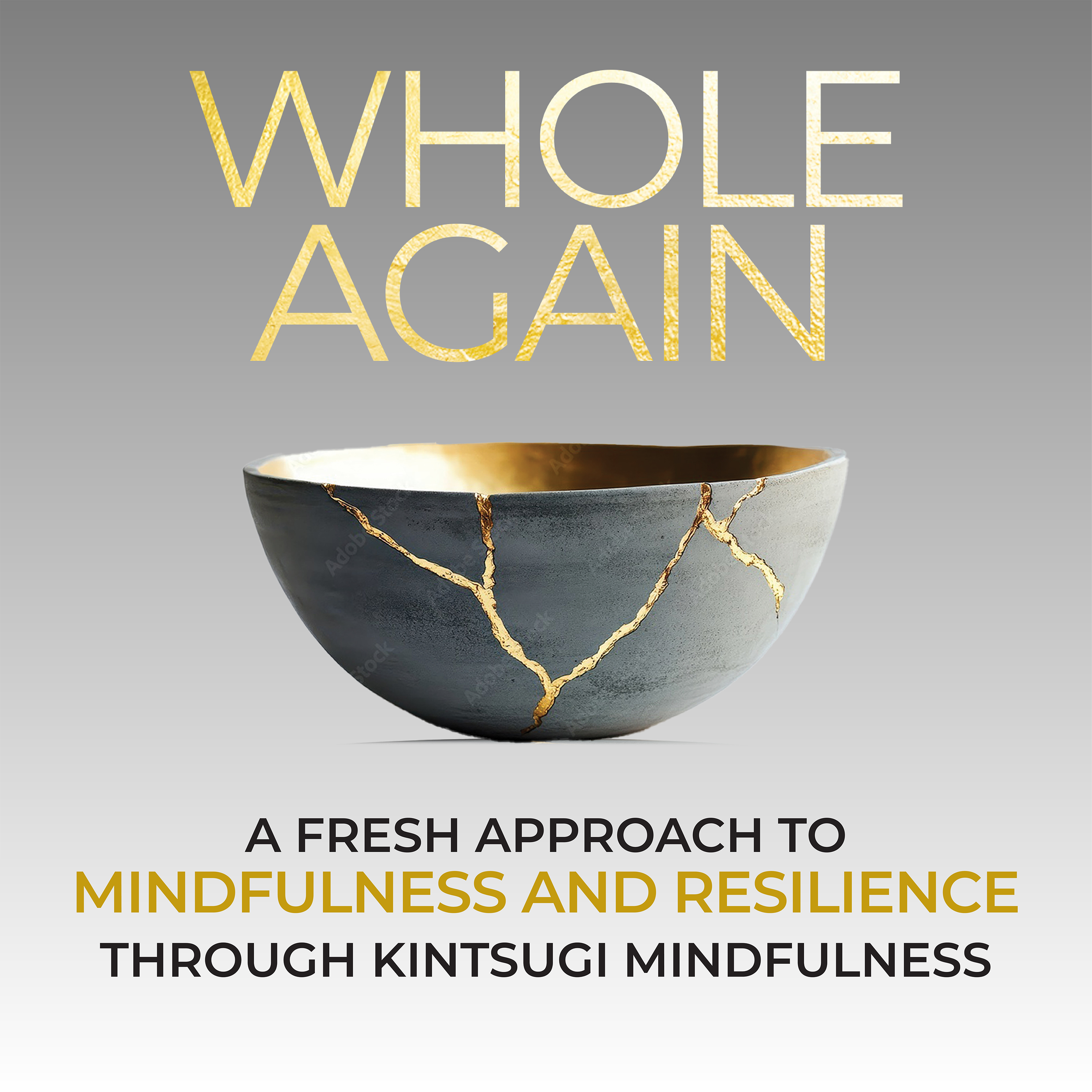
The Whole Again Podcast: Mindfulness and Resilience through Kinstugi Wisdom airs every Monday, Wednesday and Friday with Pause Breathe Reflect Microdose Meditations, Growth Mindset and Mindfulness Tips, to help us transform our scars into healing and resilience.
And between May and October, I'm sharing a new series I'm calling: A Perfectly Imperfect Union. It's about connecting with every day folks as they reflect on America at 250. Conversations will air every Tuesday, Thursday and Saturday.
-------
What if the secret to healing has been hiding inside a 3,000-year-old poem the whole time?
That's the question Michael found himself sitting with as he prepared for Christopher Nolan's new film adaptation of Homer's Odyssey. Everyone is talking about the movie, but almost no one is talking about the one theme in the poem that might matter most right now, a concept the ancient Greeks called xenia.
In this episode of Whole Again, Michael shares what he discovered while restudying The Odyssey ahead of seeing Nolan's film. Xenia was the ancient code of guest friendship, a kind of radical hospitality where strangers were welcomed into your home before you even asked their name.
The belief was that any traveler could be a god in disguise, so how you treated a stranger revealed who you really were. Compare that to today, where so much of our social life feels guarded, transactional, and quick to judge before we even get to know someone.
Michael draws the bridge from xenia to the contemplative practice of dana, or generosity of spirit, and to Rumi's poem The Guest House, which teaches us to welcome every emotion we feel, even the difficult ones, as a teacher rather than an intruder.
The idea is simple but not easy. When we practice hospitality internally, welcoming our own feelings without judgment, we get better at offering that same welcome to the people around us.
You will discover:
- The ancient Greek concept of xenia and why it mattered so much to Homer's world
- How radical hospitality differs from the guarded, transactional way we often treat strangers today
- The mindfulness practice of dana, or generosity of spirit, and its connection to presence
- What Rumi's poem The Guest House teaches us about welcoming our emotions instead of resisting them
- A simple question to carry with you about where you could practice more xenia in your own life
You can now download my Pause Breathe Reflect App with Microdose EQ for FREE on Apple’s App Store or Google Play. Discover how to spend less time on your phone and more time on things that bring you joy. Also, find the support you need to navigate today’s uncertainty with more calm and grace.
Receive a FREE copy of my book: “My Last Bad Day Shift.”
We can also connect on LinkedIn.
Subscribe to be sure you don’t miss any of the micro-meditations, wellness tips, and guidance that I publish every Monday, Wednesday, and Friday at 7:11 am.
<p> Hey there, it's Michael. Welcome to Whole Again, the show that's here in support of the person you're becoming and a meaningful life. Now, I don't know about you, but I'm starting to think just a little bit that if you don't yet know about Christopher Nolan's interpretation of Homer's poem The Odyssey, well, you might be stranded on a deserted island in the middle of the Mediterranean.</p>
<p></p>
<p>People are talking about this film left, right, and center, and I think it's awesome sauce that we're bringing back this ancient story because there's so many great threads to pull, metaphors, lessons, you name it. I think it's fantastic. But there's one topic that I really haven't heard a lot of people talk about, and it's a perfect bridge to mindfulness, and I think it can help us heal.</p>
<p></p>
<p>And that is the focus of today's episode of Whole Again. But before we get there, I wanna be upfront with you, I wanna be transparent, and this should come as no shocker to anyone. I'm not an expert on Homer, nor am I an expert on The Odyssey. I'm just an everyday folk trying to figure it out just like you.</p>
<p></p>
<p>In fact, I haven't yet seen the film. I'm due to see the film next week when we go out to Portland, Oregon to visit my mother-in-law, and I want to be an educated viewer of the film. So I've dusted off my books, I've renewed my study of The Odyssey, and I dove in because I really want to take in what Nolan is offering up to audiences.</p>
<p></p>
<p>And through my renewed study, I found this one topic, this one theme that is essential to the poem. And again, I don't think we're talking about it enough And there's plenty to talk about, as I mentioned up front. So I wanna dedicate today's episode to the concept of xenia, X-E-N-I-A. Xenia is a ancient Greek code of guest friendship.</p>
<p></p>
<p>We don't have a perfect translation for English. I've heard a lot of people call it hospitality, and since we're in America and we like to put the word radical in front of every word to make it more edgy, let's call it radical hospitality. To fully understand xenia, you really have to appreciate how crazy of a concept it is, especially through today's lens.</p>
<p></p>
<p>Back in ancient Greece, when a stranger came to your door, keep in mind there were no Ring doorbells back then, you didn't ask for their ID when they knocked on your door, or their social handle, or even their name. You just opened the door and welcomed them into your home. You washed their feet, imagine that , and you gave them a place to rest.</p>
<p></p>
<p>You probably fed them. And then after all that's done, then and only then did you ask, "So, what brings you to town? Where are you headed? What's your name?" It feels a lot different than trying to secure a room at a Airbnb or a VRBO, which sometimes I feel like I'm interrogated before I even arrive when I have to rent one of those places.</p>
<p></p>
<p>So the question is, why would someone do something crazy like that, just open their door to a complete stranger without asking them any questions? Well, they believed in Zeus's Xenos. Zeus was the protector of strangers. The belief was that any traveler could be a god in disguise, and that god could be testing your character.</p>
<p></p>
<p>So will you welcome in that stranger or potentially do them harm? Now, compare that behavior of Xenia to how we show up today. So much of our social life feels guarded, feels transactional, feels like we're always on edge thinking that someone's gonna be out to get us. Even though that's a minority of a minority, we act this way.</p>
<p></p>
<p>We check people's credentials before we let them in. Now, the concept of Xenia wasn't perfect. There was still a caste system, so if you were poor, it would be inappropriate to go to a rich person's house to ask for shelter. And I get it. Today, we're not going to bring back Xenia as the ancient Greeks knew it.</p>
<p></p>
<p>So what would happen if we brought a little Xenia back into 2026? We actually connected with a stranger. We didn't check them out before just seeing their humanity. What if we met people as if they were carrying something? Maybe they were carrying God. After all, as they say, we're all children of God.</p>
<p></p>
<p>We're all connected. We're all one. And we do that before demanding that they prove themselves to us. And that brings us to the bridge that Xenia has with mindfulness. In contemplative practices and traditions, there's a concept called generosity or dana, D-A-N-A. It's about giving, and it's not about just giving of money or material things.</p>
<p></p>
<p>It's about generosity of spirit. Think about that. True hospitality really requires total presence. It requires generosity You can't genuinely host someone if you're staring at your phone, right? You can't judge them silently or rehearse what you're gonna say next. Present moment awareness is a form of welcoming.</p>
<p></p>
<p>I think it's a practice of xenia. In fact, mindfulness asks us to practice xenia internally too. There's a favorite poem of mine called The Guest House by Rumi, and he writes that being human is a guest house. Every day a new arrival. He talks about the emotions that we feel, from sorrow to anger, to joy, to elation, to happiness.</p>
<p></p>
<p>Invite them all in. They all might be teaching us something. Stand at the door laughing. Welcome them in. So he's teaching us to practice xenia internally. Welcome all that we feel. And what's really remarkable is that when we practice xenia, almost like when we practice and offer ourselves grace to ourselves, then we get better at offering it to other people.</p>
<p></p>
<p>The offering becomes just part of how we show up. Here's my question for you for this episode: Where could you practice a bit more xenia? Whatever it might be, see if you can try to practice it today. See if you can gain some traction with it, and then let me know what you think and how it makes you feel.</p>
<p></p>
<p>And also let me know if you've seen The Odyssey. I'd love to see or hear about your take of the movie, and I'll report back after I actually watch it. So as always, thanks for being here. Thanks for listening and being part of our community. I hope you're checking out our series, A Perfectly Imperfect Union, where I'm speaking to everyday folks on their reflections of America as she celebrates year 250 this year.</p>
<p></p>
<p>And I'll have another episode for you tomorrow. But until then, remember to celebrate your scars as golden symbols of your strength and resilience, and don't forget to have fun storming the castle.</p>
 Apple Podcasts
 Castbox
 Castro
 Goodpods
 Moon FM
 Overcast
 Pocket Casts
 Podbean
 Podcast Addict
 Podcast Republic
 Spotify