Remembering 9/11: Never Forget and Forgiveness (Growth Mindset Tip #36)
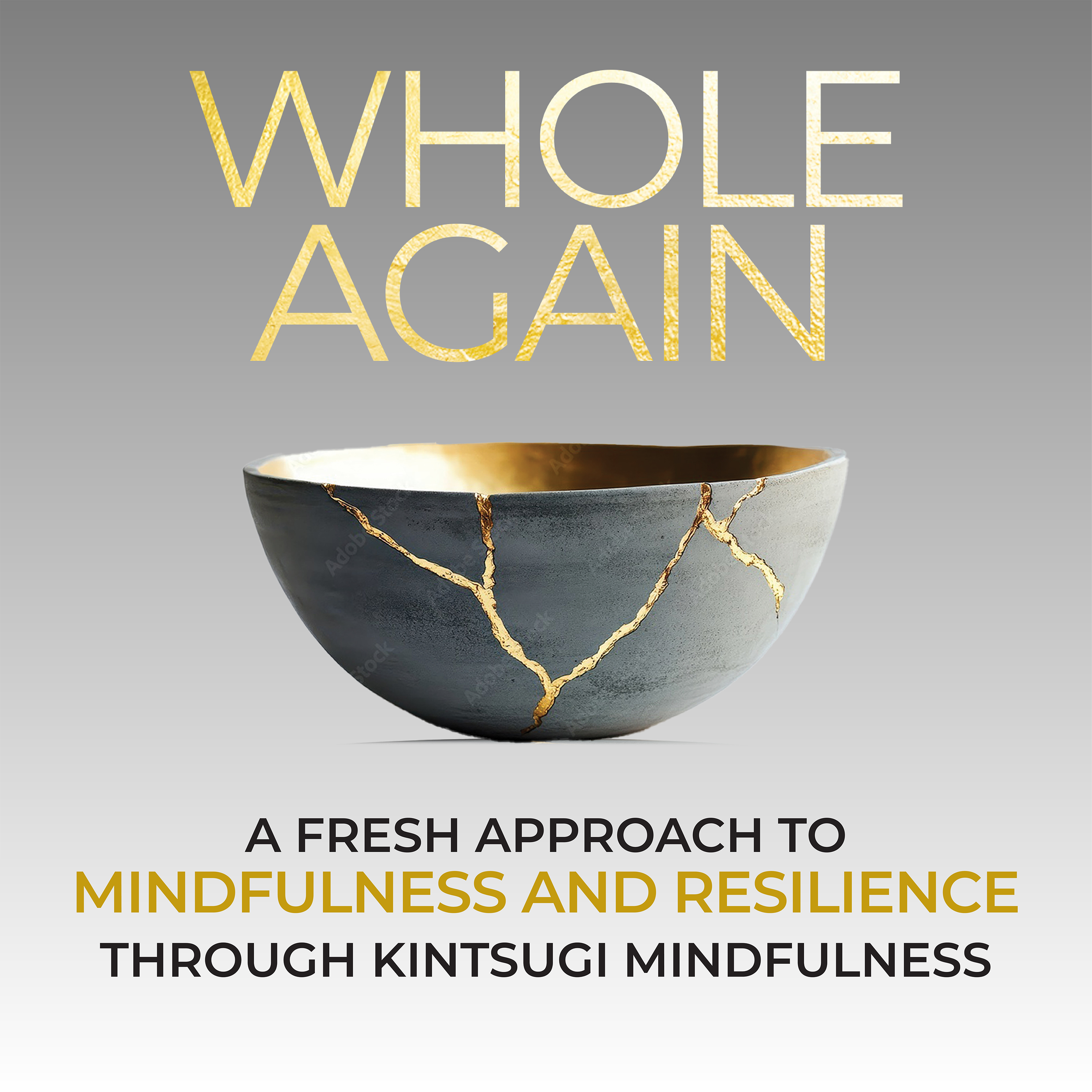
The Whole Again Podcast: Mindfulness and Resilience through Kinstugi Wisdom airs every Monday, Wednesday and Friday with Pause Breathe Reflect Microdose Meditations, Growth Mindset and Mindfulness Tips, to help us transform our scars into healing and resilience.
And between May and October, I'm sharing a new series I'm calling: A Perfectly Imperfect Union. It's about connecting with every day folks as they reflect on America at 250. Conversations will air every Tuesday, Thursday and Saturday.
-------
Where were you twenty-five years ago today?
Michael was in a rehab session at the Kessler Institute in West Orange, New Jersey, when he overheard a therapist mention a plane hitting the Twin Towers. He called his wife and told her to turn on the TV—it didn't matter what channel.
In this episode of Whole Again, Michael revisits September 11, 2001 through the lens of Rumi's poem "The Guest House," and the grief, shock, and unexpected gratitude that arrived that morning like uninvited guests. But this episode isn't only about remembering. It's about what we've let ourselves forget, and the one thing Michael says we've never really talked about in twenty-five years of "never forget": forgiveness.
This is the heart of tip #36.
You can now download my Pause Breathe Reflect App with Microdose EQ for FREE on Apple’s App Store or Google Play. Discover how to spend less time on your phone and more time on things that bring you joy. Also, find the support you need to navigate today’s uncertainty with more calm and grace.
Receive a FREE copy of my book: “My Last Bad Day Shift.”
We can also connect on LinkedIn.
Subscribe to be sure you don’t miss any of the micro-meditations, wellness tips, and guidance that I publish every Monday, Wednesday, and Friday at 7:11 am.
<p> If you're of a certain age, you remember exactly where you were twenty-five years ago today. Hey there, it's Michael. Welcome to Whole Again, the show that's here in support of the person you're becoming and a meaningful life. Twenty-five years ago today, I was doing a rehab session at the Kessler Institute for Rehabilitation in West Orange, New Jersey, and I overheard the therapist talking about some plane flying into the Twin Towers.</p>
<p></p>
<p>And I called my wife and I told her to turn on the TV and she asked me what channel and I said, "It doesn't matter. Any channel will do." At the time, this plane was thought to be a small plane, like a Cessna, and obviously as the hours unfolded, we learned a lot more about what was happening on September 11th, two thousand and one.</p>
<p></p>
<p>If there's a day that captures Rumi's poem, The Guest House, "This being human is like a guest house. Every morning a new arrival. A joy, a depression, a meanness, some momentary awareness comes as an unexpected visitor." That morning as so many people did, man, I cried. I was in shock, but at the same time, I felt grateful that so many first responders had so much courage to go in to help complete strangers.</p>
<p></p>
<p>So I was feeling, probably like you, a range of different emotions. Life felt shaken. It felt uncertain. And as we know, this is well before the internet as we know it today. Often I think about if a nine eleven happened today with social media, how would we fare? What we saw in the days after was a coming together.</p>
<p></p>
<p>What's come out of my series, A Perfectly Imperfect Union, so many people have shared how we're really good at coming to each other's aid during a crisis. We lose the labels and we just figure out a way to help That notion that we can step up and leave the labels at the door when someone's in need.</p>
<p></p>
<p>Well, I believe if we can do it, then we can do it day in and day out. So I have hope and optimism for our future. Plus, I'm just a hopeful and optimistic guy. I live just outside of New York City in a New Jersey suburb. So when I see bumper stickers that say, "Never forget," I agree. It's almost impossible to forget what happened twenty-five years ago.</p>
<p></p>
<p>When I ride my bike sometimes in the city, I go down the West Side Highway, I hug the Hudson River, and ultimately I get to the Freedom Tower. And when I do, I often think about if whether or not we have forgotten. I don't know what it's like in other parts of the States, but again, around here it's almost impossible to forget.</p>
<p></p>
<p>But through one lens, we could say we have forgotten the victims, except when we come to a major anniversary like twenty-five years or supporting our first responders, because as we've seen, some of their health challenges have only surfaced now. But we still debate how to support them. It seems like a layup to me.</p>
<p></p>
<p>If we never forget, then those decisions, at least in my opinion, are relatively easy. I think we've also forgotten Saudi Arabia's involvement in nine eleven, their funding of terrorists. And in some circles, people are like, "Hey, there's money to be had to partner with the Saudis." And the Saudis have done at least a worthwhile effort in trying to sports wash us all.</p>
<p></p>
<p>So it appears as if, if there's a buck to be made, we can forget that. We can forget what you did back then, because there's money to be made right now. So yeah, a lot of talk about never forgetting. But in the twenty-five years, I've never heard us think about the concept of forgiveness, which believe me, is so much easier said than done.</p>
<p></p>
<p>But I'll share this story with you In 2012, we took a family vacation to Europe that included going to Kraków and taking the train to Auschwitz to get a private tour of that concentration camp by Eva Kor, who was living in Terre Haute, Indiana, at the time. After the war, she immigrated. Her family was sent there, and she was a twin, so she got extra special attention.</p>
<p></p>
<p>They did unbelievable medical experiments on her and her sister, and somehow they survived. They made it through the war. They made it through the concentration camp. The rest of her family, and of course 6 million other Jews, didn't. Eva is a noteworthy Holocaust survivor because in 1995, she stunned her community, and really the world, by choosing to forgive the Nazis, and her critics came out quite loudly, as you can imagine, saying that she's excusing genocide by forgiving the Nazis.</p>
<p></p>
<p>But Eva clarified what forgiveness actually meant. She explained that forgiveness had nothing to do with the perpetrators. It wasn't a gift to them, nor was it an act of forgetting. She saw it as an act of self-liberation. She felt that if she carried around all this hatred, it would dictate the rest of her life, so she chose to forgive as a way to release all that anger that she was carrying.</p>
<p></p>
<p>But she also chose not to forget So today, as we remember what happened twenty-five years ago, when we honor the victims, when we show our respect to our first responders and all those today living with illness that came out of that day twenty-five years ago, it's an act of never forgetting. It's a way to respect our history.</p>
<p></p>
<p>And when we continue to tether ourselves to the bitterness of that day, then we're forever connected to the trauma. I learned this through my accident and my act of forgiveness towards the driver. Again, much smaller scale than what happened twenty-five years ago on nine eleven, and of course, what happened in Eva's life with the Holocaust.</p>
<p></p>
<p>What I've learned from the last twenty-five years and my own trauma, and this is tip number thirty-six that I'm sharing with you, and I've learned this from Eva as well as others, is that forgiveness doesn't mean that we minimize what happened. We erase or minimize the evil that was done or the harm that was done.</p>
<p></p>
<p>Instead, it means that you've made a decision, an intentional one, that your inner peace is worth more than holding on to the rage and the grudge that only ends up hurting you over and over again. Again, it's an intentional choice to help you feel whole again. And no, you don't have to forget, but there is value in forgiveness.</p>
<p></p>
<p>And today, as we pause for a moment of silence, as the nation reflects on the lives lost and what happened that day, that in that space of reflection, there's just enough room for forgiveness. Again, not forgetting, but the act of forgiveness as a way to help us heal And I also hope we can remember in the days that immediately followed 9/11, we, and it was not perfect, but we showed up for each other.</p>
<p></p>
<p>We were terrified, worried, anxious, all those different emotions that come into our guest house every day, as Rumi writes. And we still found a way to see each other, to come together, and I have faith that we can choose that path once again, and it will not take a crisis for us to get there</p>
<p></p>
<p>As always, thanks for listening. Thanks for being here. Remember that our scars are golden symbols of our strength and resilience. And may peace be with you, and may peace be with all of us</p>
<p></p>
<p>And if you wish to learn more about creating beautiful ripples and how to prevent a bad moment from turning into a bad day, please visit my website, michaelobrienshift.com, and sign up for my newsletter called The Ripple Effect. And join us each Monday, Wednesday, and Friday here at Whole Again, and discover how you can heal, grow, and become more resilient, and celebrate our scars as golden symbols of strength and resilience.</p>
<p></p>
<p>Until then, remember, you can always come back to your breath. You've got this, and we've got you.</p>
 Apple Podcasts
 Castbox
 Castro
 Goodpods
 Moon FM
 Overcast
 Pocket Casts
 Podbean
 Podcast Addict
 Podcast Republic
 Spotify