Growth Mindset Tip #25: The Value of Patience for Mindfulness and Resilience
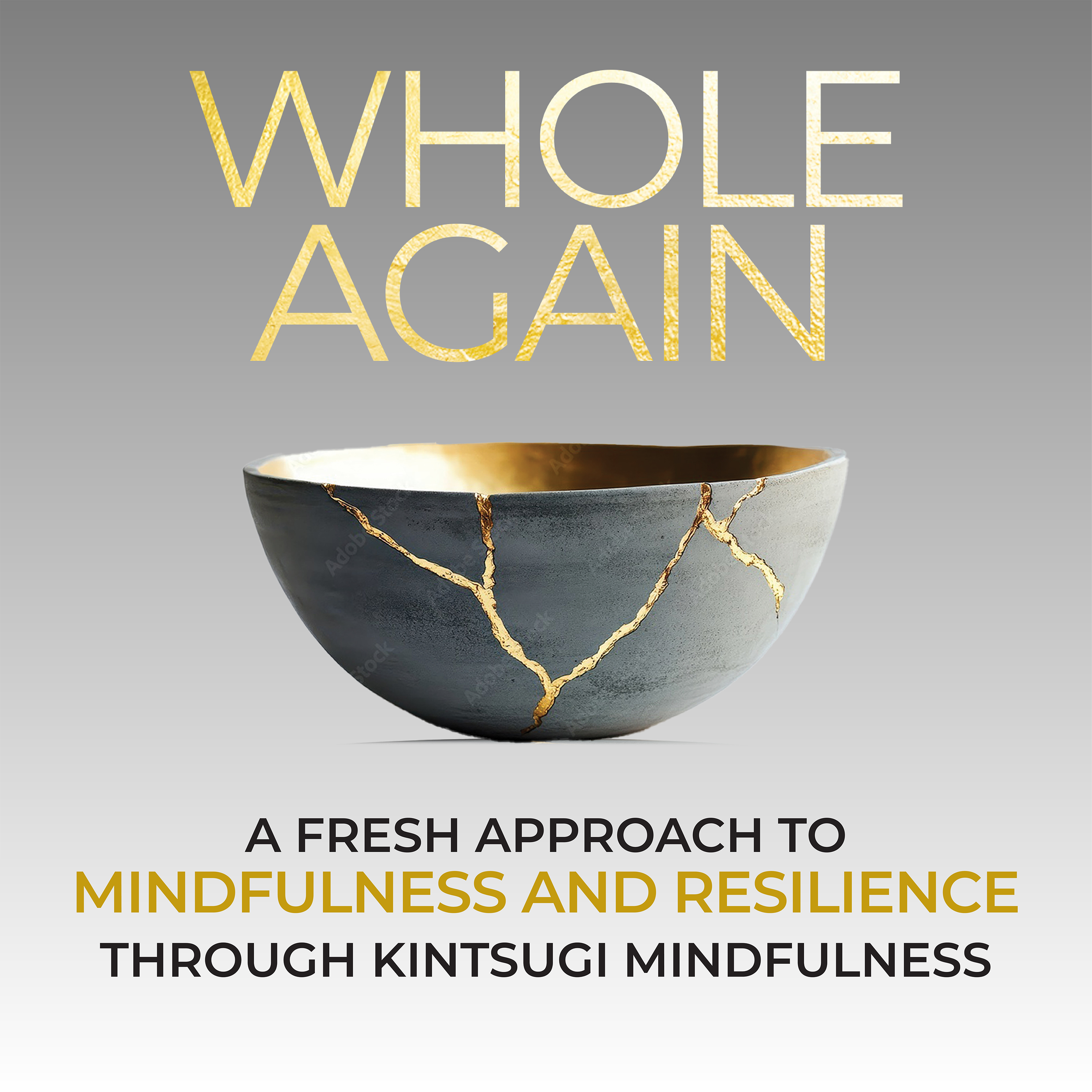
The Whole Again Podcast: Mindfulness and Resilience through Kinstugi Wisdom airs every Monday, Wednesday and Friday with Pause Breathe Reflect Microdose Meditations, Growth Mindset and Mindfulness Tips, to help us transform our scars into healing and resilience.
And between May and October, I'm sharing a new series I'm calling: A Perfectly Imperfect Union. It's about connecting with every day folks as they reflect on America at 250. Conversations will air every Tuesday, Thursday and Saturday.
-------
Are you confusing patience with passivity?
Many of us do. And in a culture that rewards urgency and speed, patience has gotten a bad reputation, as if staying patient means sitting still and letting life happen to you.
In this Friday growth mindset tip, Michael unpacks one of the most misunderstood words in leadership and in life. Drawing on his rehab after My Last Bad Day and a recent coaching conversation with a senior executive navigating a corporate change initiative, Michael reframes patience not as the absence of action, but as disciplined engagement without attachment to immediate results.
You will discover:
- Why the word "patience" likely doesn't mean what you think it means, and how that misreading costs you
- The critical difference between a passive person and a patient person
- Michael's three-part framework for patience: acceptance, persistence, and trust
- Why a good gardener is the perfect metaphor for how patient leaders actually operate
- How confusing urgency with importance creates a culture of chaos and what to do instead
- A simple one-to-two percent shift you can make this week to start playing the long game
Press play and let Tip 25 meet you right where you are.
And if this episode speaks to you, share it with someone on your peloton who could use a reminder that some things can't be rushed and that's exactly as it should be.
You can now download my Pause Breathe Reflect App with Microdose EQ for FREE on Apple’s App Store or Google Play. Discover how to spend less time on your phone and more time on things that bring you joy. Also, find the support you need to navigate today’s uncertainty with more calm and grace.
Receive a FREE copy of my book: “My Last Bad Day Shift.”
We can also connect on LinkedIn.
Subscribe to be sure you don’t miss any of the micro-meditations, wellness tips, and guidance that I publish every Monday, Wednesday, and Friday at 7:11 am.
<p> Hey there, it's Michael. Welcome to Whole Again, the show that's here in support of the person you're becoming in your quest to live a meaningful life. And let's start by saying it's Friday. Congratulations, you made it through the week. And each Friday this year, in celebration of my 25th anniversary of my last bad day that sparked all of this, I'm sharing unsolicited tips that I've learned over the last 25 years to help me step into the person I'm becoming and live a meaningful life, and I'm sharing them each week.</p>
<p></p>
<p>And I hope most of them will be, one, at least validating because you already have included them in what I would call your whole house cookie recipe, or it will offer you a new perspective that you may wish to try on. Now some of them are gonna be way off target for you, and that's okay. Take what works and leave the other ingredients behind.</p>
<p></p>
<p>And this week we're up to number 25. I was actually gonna save this for later in the year, but I recently had a conversation with one of the executives I coach around a corporate change initiative, and this topic came up, so I'm moving this tip to this week. And that topic was all around being patient, which his initial reaction was like, "Uh, not so much.</p>
<p></p>
<p>We can't be patient. We gotta go. We gotta be urgent." And if that is what comes up for you when you hear the word patience, stick with me. Let me share more with you. Patience is one of those words that, well, it gets mistaken as sitting quietly, folding our hands, looking calm, letting life happen to you. And if I could tap into the wisdom of Inigo Montoya from one of my favorite movies, The Princess Bride, "You keep using that word.</p>
<p></p>
<p>I do not think it means what you think it means." And I don't think patience means what we think it means either, and I had to learn it the hard way through my rehab. Patience, at least from my perspective, and you can push back on what I think it means, is the ability to stay engaged with reality without demanding that reality move at your preferred speed The thing is, there's a real difference between a passive person and a patient person.</p>
<p></p>
<p>A passive person will say, "There's nothing I can do." A patient person will think otherwise. They'll say, "There is something I can do, but I understand that some things cannot be rushed." Back in my executive corporate days, I created a video that featured a gardener. It was a metaphor for the care that we would provide to our patients.</p>
<p></p>
<p>So for this moment, I'll invite you to think of a gardener A good gardener is patient. They water, they weed, they fertilize. They tend to the soil almost every day. What they don't do is dig up the seed every morning to check out if it's growing or not. That would kill it. So patience isn't the absence of action.</p>
<p></p>
<p>It's disciplined action without the attachment to immediate results. Through my own mindfulness practice, I've come to see patience in three parts. One part is acceptance, which we've talked about in the past here on Whole Again. It's that ability to see things as they actually are, not necessarily how we wish them to be.</p>
<p></p>
<p>The second part is persistence, which is all about taking wise action consistently, even when you can't see progress yet. And the third part is trust, trusting that some outcomes simply need time. Healing requires time. Learning requires time. So we take the steps that are meaningful, that are intentional, and we trust that the outcome we're looking for will come in time.</p>
<p></p>
<p>For leaders, patience often gets misunderstood. It's not about tolerating poor performance. No, it's not that at all. It means knowing the difference between what can change today and what requires consistency, frequency, and repetition, and the ability to endure and persist. Basically, as I'd like to say, what can happen if we keep pedaling?</p>
<p></p>
<p>We give it some time. We turn the pedals a few more times 'cause that's what that change needs. Culture work, change management in corporate environments, well, that is patient work. Parenting is also patient work. I say that as a parent. Meditation is also patient work. It takes time, and that doesn't necessarily jive with our rush-rush, do-it-right-now culture, right?</p>
<p></p>
<p>But all this being patient is essential to a meaningful life. We also know that recovery and healing definitely require patience. That's really trusting the process. And ultimately, I think patience is about courage, at least a form of courage. You're choosing to stay present in the moment with uncertainty instead of trying to force it, to shove it down the pipe, and rush into action that may not, as cliché as this sounds, move the peanut forward.</p>
<p></p>
<p>Now, anyone out there can demand a quick fix. There are plenty of leaders who have a do-it-right-now attitude. I used to work for one of them, and I will say, to be fair, some things do require urgent action, but those things should be few and far between because if everything is urgent, nothing is urgent.</p>
<p></p>
<p>All you're doing is creating a culture of chaos, and no one performs up to their ability in that type of environment. So when you're being patient, you're being courageous because you're sitting and not knowing, and you keep doing the work anyway. So there you have it. Tip number twenty-five. We're almost halfway home.</p>
<p></p>
<p>How exciting is that? My encouragement to you this week is to see if you can identify a couple of areas of your life where more patience would be valuable. I'm not asking for you to do a one eighty, simply one or two percent more patient, because here at Whole Again, we take small steps, but we do them consistently over time.</p>
<p></p>
<p>And when you feel you have that aspect of your life mastered, if you will, knowing that we probably never get to mastery, but we take steps towards it, you can add a few new areas of your life where patience could also be valuable. That's how we play the long game here on Whole Again.</p>
<p></p>
<p>As always, thanks for being here. Thank you for being part of our community. I hope you're checking out our new series, A Perfectly Imperfect Union, that I'm running all the way up to November. I'll have a new episode of that series for you tomorrow. But until then, let's remember to celebrate our scars as golden symbols of our strength and resilience, and don't forget to have fun storming the castle.</p>
<p></p>
<p>And if you wish to learn more about creating beautiful ripples and how to prevent a bad moment from turning into a bad day, please visit my website, michaelobrienshift.com, and sign up for my newsletter called The Ripple Effect. And join us each Monday, Wednesday, and Friday here at Whole Again, and discover how you can heal, grow, and become more resilient, and celebrate our scars as golden symbols of strength and resilience.</p>
<p></p>
<p>Until then, remember, you can always come back to your breath. You've got this, and we've got you</p>
 Apple Podcasts
 Castbox
 Castro
 Goodpods
 Moon FM
 Overcast
 Pocket Casts
 Podbean
 Podcast Addict
 Podcast Republic
 Spotify