Growth Mindset or Mindfulness and Resilience: Be A Good Wheel To Follow
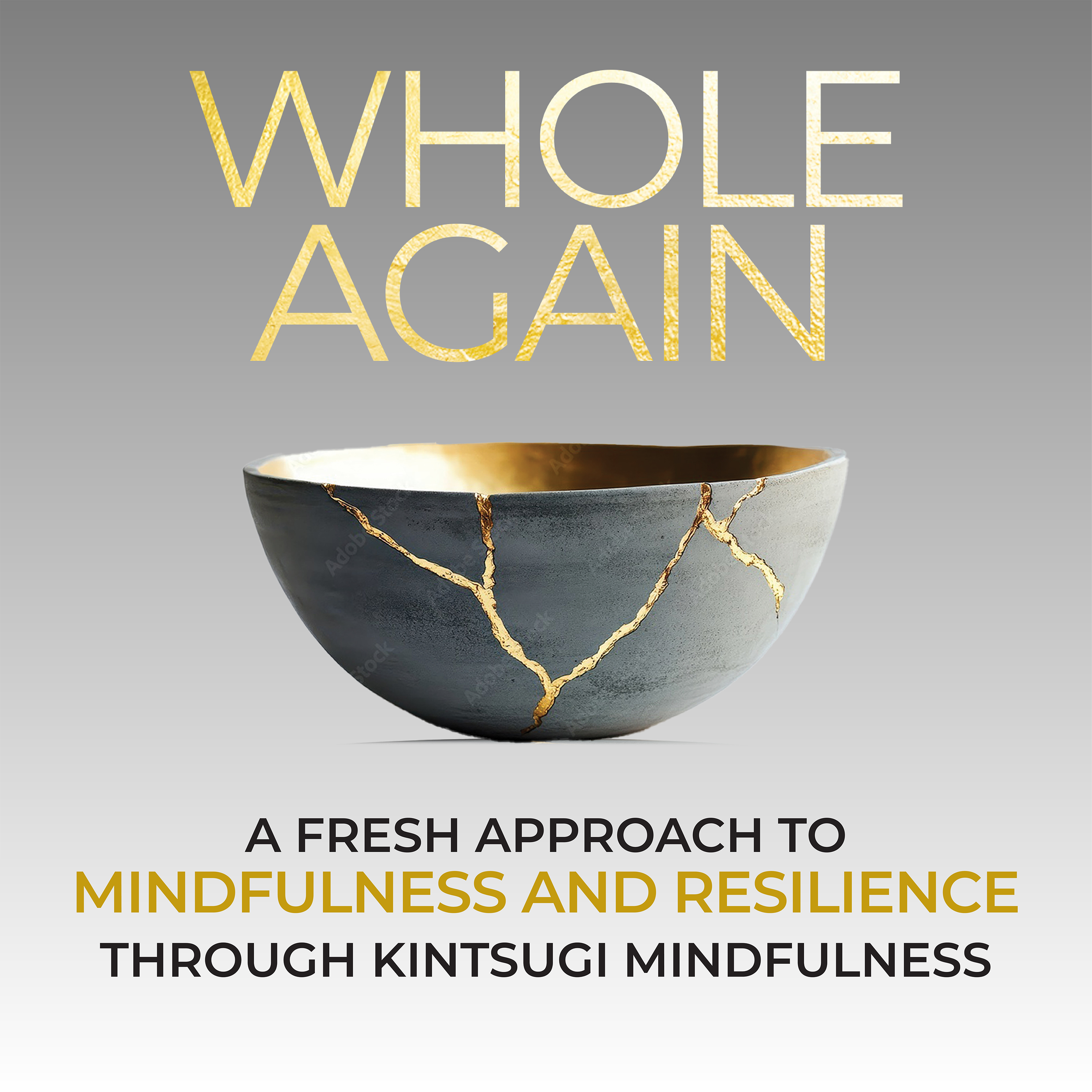
The Whole Again Podcast: Mindfulness and Resilience through Kinstugi Wisdom airs every Monday, Wednesday and Friday with Pause Breathe Reflect Microdose Meditations, Growth Mindset and Mindfulness Tips, to help us transform our scars into healing and resilience.
And between May and October, I'm sharing a new series I'm calling: A Perfectly Imperfect Union. It's about connecting with every day folks as they reflect on America at 250. Conversations will air every Tuesday, Thursday and Saturday.
-------
Who in your life is in your peloton right now?
And are you worth following?
Michael is a Mindset and Resilience coach, meditation teacher, and survivor of a near-death cycling accident that changed everything. For 25 years, he has been translating the lessons of the road into a framework for living, leading, and showing up.
In this Friday episode of Whole Again, Michael unpacks what it means to be a good wheel -- the highest compliment you can give a cyclist, and one of the most honest questions you can ask yourself as a human being. In a peloton, riders in the draft save 20 to 40 percent of their energy. That only works if the person out front is steady, trustworthy, and consistent. The moment they become erratic, the whole group burns more just to stay safe.
Sound familiar?
Michael gets refreshingly honest here. He admits he hasn't always been a good wheel to follow. Stress, overcommitment, saying yes when the answer should have been no -- he has been there. Most of us have. But he offers three concrete things you can do today to show up better for the people riding behind you: know your real capacity (not your aspirational one), communicate with intention, and take your turn out front.
No blame. No shame. Just a quiet look in the mirror and one small shift.
Before you go, here's Michael's reflection for you:
Where in your life are you an inconsistent wheel to follow, and what is one small thing you could do differently this week?
Drop your answer in the comments and share this episode with someone in your peloton who needs to hear it.
You can now download my Pause Breathe Reflect App with Microdose EQ for FREE on Apple’s App Store or Google Play. Discover how to spend less time on your phone and more time on things that bring you joy. Also, find the support you need to navigate today’s uncertainty with more calm and grace.
Receive a FREE copy of my book: “My Last Bad Day Shift.”
We can also connect on LinkedIn.
Subscribe to be sure you don’t miss any of the micro-meditations, wellness tips, and guidance that I publish every Monday, Wednesday, and Friday at 7:11 am.
<p> Hey there, it's Michael. Welcome to "Whole Again," the show that's here in support of the person you're becoming and your quest to live a meaningful life. And it's Friday, so I have another growth mindset tip for you. All this year, I'm sharing these tips on Fridays as a way to celebrate the twenty-fifth anniversary of my last bad day, also known as my near-death cycling accident that sparked all of this.</p>
<p></p>
<p>And this week, we're up to number 20. Now, I believe we all have our own Toll House cookie recipe for growth and development. Not everything that has worked for me will work for you, and I'm sure you do a few things that work for you, and they won't work for me, and that's cool. So I share these tips as potential ingredients, things that you may wish to experiment with.</p>
<p></p>
<p>Some will be right on point, and as they say in the movie Major League, some will be a bit outside. They won't do it for you. So take what you think would work and then leave the rest behind. And this month, the month of May, all the different tips have been cycling related. It makes sense because what I do today through my executive coaching, speaking at companies, this podcast, and my work as a meditation teacher, all got sparked because of a cycling related event.</p>
<p></p>
<p>But this month, the month of May, is also National Bike Week, and that is the primary reason why all the tips this month have been cycling related. And as I mentioned a minute ago, we're up to number 20. And number 20 is be a good wheel</p>
<p></p>
<p>If you're not a cyclist, let me explain what this term means. In cycling, when someone calls you a good wheel, that's one of the highest compliments they can give you. It means you're a cyclist that others want to follow. They trust you. Your pace is steady, and you don't brake suddenly, and you don't swerve without some type of warning.</p>
<p></p>
<p>A good wheel is reliable, consistent, safe, trustworthy, worth following And here's why this matters so much, especially today, especially today. When you're riding with a group, which is called a peloton in the world of cycling, you can go further and faster together because of aerodynamics The people sitting in the draft tucked in behind the people out front are saving twenty to forty percent of their energy.</p>
<p></p>
<p>It's your high school physics class in action. When you're in the draft, you are literally getting pulled along by the people out in front. But this only works if the people out in front are good wheels to follow. If they're erratic, if they're unpredictable, none of this works because you can't trust them.</p>
<p></p>
<p>You don't get the synergistic effect of being in the group. In fact, you're probably burning more calories just to be safe. And the cool thing about being a good wheel, like all the other tips, all the things I talk about, all the metaphors I talk about as it relates to cycling, can be applied to our real life, our business life.</p>
<p></p>
<p>Being a good wheel is a life skill. It's a growth mindset practice, if you will. And I will say this: I haven't always been a good wheel to follow. If you know my story, I've gone through a lot, and sometimes I've been a bit inconsistent. This happens for any of us when we are going through stressful moments.</p>
<p></p>
<p>We get a little shaky. We might promise things, and we don't follow up on them. We might be short or sort of disengaged We might say yes when we really want to say no, and we might do a little judging of those around us. So any of us can be inconsistent. We might not always be a good wheel to follow, but with intentionality each day, each day we show up, we can set our intentions to be a good wheel to follow.</p>
<p></p>
<p>And in order to be a good wheel, you don't have to be perfect because here we're all perfectly imperfect. But being a good wheel means that we're honest and consistent and self-aware. And there are three things we can do to increase the likelihood that we show up as good wheels to follow. One is to know our pace, know what we're capable of, or in other words, knowing our capacity and not our aspirational one, the real one for this moment.</p>
<p></p>
<p>Sometimes we overpromise, and that's above what we can actually deliver. And when we overcommit or overpromise, it's one of the most common ways we end up not being a good wheel because our behavior or our performance is inconsistent We don't mean to be, but when we overcommit, when we don't understand what our current capacity really is, then we run the risk of not being a good wheel to follow because we lose some of our trustworthiness.</p>
<p></p>
<p>The second thing, communicate with intention. In cycling, when the peloton, whether that's a group of four or five cyclists or a group of 40 or more, it's incumbent upon the person out front, the good wheel to follow, to call out the road hazards. When there's a pothole or a grate or a car parked or a car coming towards them, or when a left turn will be made, or when a right turn will be made.</p>
<p></p>
<p>When we're following the wheel in front of us, sometimes we don't see everything the person out front sees Calling things out, communicating with intention, this helps make the ride safer and faster. And the third thing is take your turn up front. In cycling, we rotate. Someone's not out in front all the time.</p>
<p></p>
<p>They slip back, they draft a little bit. In life or at work, it means doing your fair share. It means that you're not hiding, drafting off everyone else. You're also doing the work. You're showing a commitment to the greater good, the greater team The concept of being a good wheel is a good thing to pause, breathe, and reflect on.</p>
<p></p>
<p>And I'll encourage you to do just that, to think about where you could be a better wheel to the people who might be following you</p>
<p></p>
<p>Are you an inconsistent wheel to follow or are you over-promising? And this is not some type of invitation to beat yourself up, to feel bad about yourself. This is not a blame and shame kind of exercise. It's more about looking in the mirror, this is the way we grow, and ask ourselves in reflection, how could we get just a bit better?</p>
<p></p>
<p>And then we can make a small shift. It doesn't have to be huge, but just something small enough that we can do consistently, day in and day out, to be a better wheel to follow And when we're a better wheel to follow, our pelotons, our communities, our work culture, our families, they all get stronger.</p>
<p></p>
<p>There's more trust. And with trust, together we can go far, and together we can go fast So there you have it. Tip number 20, be a good wheel to follow. And as always, thanks for being here. Thanks for listening. Thanks for being part of my Peloton. If this tip resonated with you and you think a member of your Peloton might like it, I hope you'll share it with them.</p>
<p></p>
<p>And I hope you're checking out the new series I'm doing called A Perfectly Imperfect Union. My aim is to talk to 102 people across all 50 states here in America, plus the District of Columbia, and ask them about their reflections as America turns 250. And the next episode is tomorrow, so I hope you'll check it out.</p>
<p></p>
<p>And I hope you'll share it with a few of your friends as we celebrate all the goodness of America, and we also work on our imperfections, just like Kintsugi. Because once those heal, those scars can be golden symbols of our strength and resilience. So until then, let's do just that. Let's celebrate our scars as golden symbols of our strength and resilience, and don't forget to have fun storming the castle.</p>
 Apple Podcasts
 Castbox
 Castro
 Goodpods
 Moon FM
 Overcast
 Pocket Casts
 Podbean
 Podcast Addict
 Podcast Republic
 Spotify