Growth Mindset Tip #24 for more Mindfulness and Resilience: Beginner's Mind
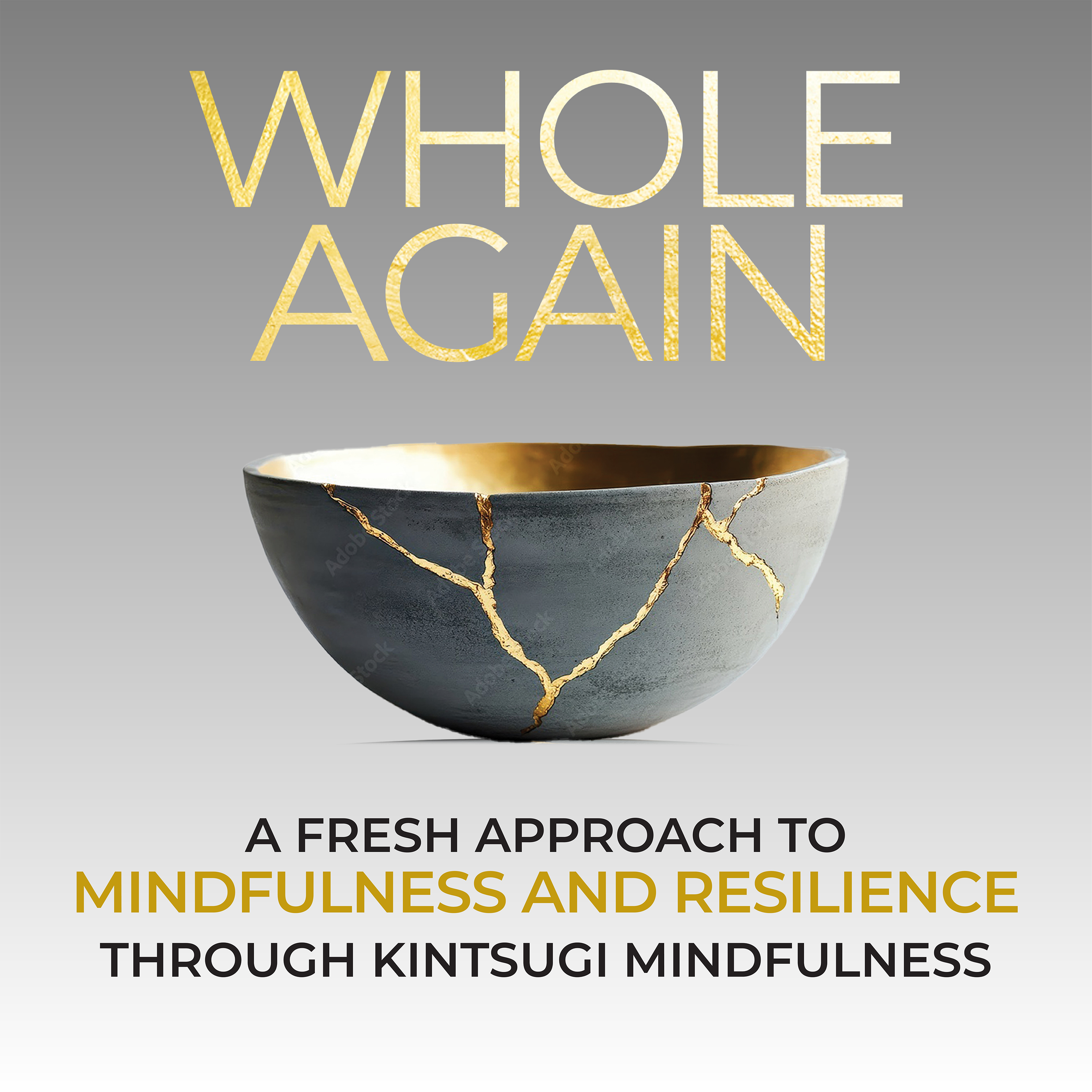
The Whole Again Podcast: Mindfulness and Resilience through Kinstugi Wisdom airs every Monday, Wednesday and Friday with Pause Breathe Reflect Microdose Meditations, Growth Mindset and Mindfulness Tips, to help us transform our scars into healing and resilience.
And between May and October, I'm sharing a new series I'm calling: A Perfectly Imperfect Union. It's about connecting with every day folks as they reflect on America at 250. Conversations will air every Tuesday, Thursday and Saturday.
-------
When was the last time you looked at something you've seen a thousand times and actually saw it?
That's the heart of this week's Last Bad Day tip, number 24 in our yearlong series celebrating 25 years since Michael's near-death cycling accident in the New Mexico desert.
This week, Michael introduces the Japanese concept of shoshin -- beginner's mind -- and explores what it means to approach the familiar as if encountering it for the very first time. From household puzzles to physical therapy after a life-altering crash, beginner's mind is one of the quiet, powerful tools that helped Michael rebuild his life piece by piece.
And just like the Kintsugi artist who looks at broken pottery and wonders what it can become -- rather than what it once was -- beginner's mind invites us to trade the grooves of habit for something more alive.
You will discover:
- Why your brain's love of patterns can quietly steal your sense of wonder and what to do about it
- The Zen teaching from Suzuki that reframes the difference between expertise and openness
- How beginner's mind became a lifeline for Michael during rehab, and why it still shapes the way he leads, listens, and lives
- Three simple, practical ways to bring shoshin into your day, including one that starts with your toothbrush
Press play and discover why the solution you've been looking for may have been right in front of you all along.
You can now download my Pause Breathe Reflect App with Microdose EQ for FREE on Apple’s App Store or Google Play. Discover how to spend less time on your phone and more time on things that bring you joy. Also, find the support you need to navigate today’s uncertainty with more calm and grace.
Receive a FREE copy of my book: “My Last Bad Day Shift.”
We can also connect on LinkedIn.
Subscribe to be sure you don’t miss any of the micro-meditations, wellness tips, and guidance that I publish every Monday, Wednesday, and Friday at 7:11 am.
<p> Hey there, it's Michael. Welcome to Whole Again, the show that's here in support of the person you're becoming in your quest to live a meaningful life. And since it's Friday, I have another one of my last bad day tips for you. If you've been following along, you know that this year is the 25th anniversary of my last bad day, my near-death cycling accident.</p>
<p></p>
<p>And to celebrate, I'm giving away copies of my book, My Last Bad Day Shift, and also sharing a weekly tip or something I've learned that has helped me along the way, either in my rehab and recovery, in my professional life, or in life in general. And this week we're up to number 24, so we're almost halfway there.</p>
<p></p>
<p>But before we get into this week's tip, I will say I believe we all have our own personal Toll House cookie recipe Our own way of living a meaningful life and stepping into the person you're becoming. So by no means do I think you should adopt all of these tips. Some will hit the mark for you, and you may wish to put them in your recipe, and others are gonna be like, "Nah, no way, Michael."</p>
<p></p>
<p>So just leave that one to the side. No worries. We're good. So make these weekly tips work for you. You know better than anyone else what you should include in your formula or your recipe and what you need to leave behind. So let's get into it. My household loves a good puzzle. Could be a jigsaw puzzle, a crossword, or all those puzzles that The New York Times puts out.</p>
<p></p>
<p>And sometimes when you're working on a puzzle and you get stuck, the best thing to do is stop, put it down, and come back again. Come back with a beginner's mind, which is tip number 24. If you're also into puzzles, I think you know where this is going. You're working on, say, a jigsaw puzzle. You're looking through all the different pieces, trying to find that piece that fits that part of the puzzle that you believe you need in order to open up the rest of the puzzle to be solved, and you can't see the piece.</p>
<p></p>
<p>You've looked everywhere. You start to wonder, "Maybe I was shorted one puzzle piece in the box, or maybe my cat or dog ate it." So you stop, and you come back. Maybe you approach the table from a different angle, and there it is, that piece. It was staring at you the whole time. Now, if puzzles aren't your jam, no worries.</p>
<p></p>
<p>I have a different question for you. This is a question actually for all of us, the puzzle aficionados and those that really don't dig them. When was the last time you looked at something you've seen a thousand times? It could be your morning coffee or tea. It could be your commute into the office. Could be your partner's face.</p>
<p></p>
<p>And actually saw it. If you can't remember, that's cool. You don't have a character flaw. Your brain's just doing what brains do. Brains love to find patterns. It makes their job more efficient. But that process of automation can rob us of mindfulness and wonder The Japanese have a term for beginner's mind.</p>
<p></p>
<p>It's called shoshin, and at its core, what it means is living our lives, encountering our lives, our relationships, our routines, our challenges, our puzzles, and looking at them like we're experiencing them for the very first time Looking at something really familiar and choosing to see it as new. There's a Zen teacher named Suzuki, and he wrote, and I'm paraphrasing here, "In the beginner's mind, there are many possibilities, but in an expert's mind, there are just a few."</p>
<p></p>
<p>Think of a child and all their questions around why, all the whys they happen to ask parents. They're looking at things, and they're really trying to figure things out. But as we get older, we tend to then settle into grooves. We might think that this is just the way it is, and we start to take things for granted.</p>
<p></p>
<p>Beginner's mind was something I had to lean on heavily through my rehab. I had in my head the way I always used to do things. I was trying to cling to that, the old way. But through beginner's mind, I tried to approach things like more everyday things, like walking again or riding my bike again. Basic things that I didn't really use much brainpower prior to my accident.</p>
<p></p>
<p>Well, through beginner's mind, I almost had to relearn so much of my life, and I took this concept and tried to apply it in other aspects of my life, personally and professionally, and more than just our puzzle-solving days at home. Sometimes in our professional lives, one of the best things we could do, especially with group dynamics, is to approach the problems we're trying to solve through the lens of a beginner's mind, 'cause everyone on the team has a history, has different roles they often play.</p>
<p></p>
<p>By inserting beginner's mind into the conversation, it's quite possible that you can come up with a solution that you may not have ever realized without practicing beginner's mind. Even our kintsugi metaphor here on Whole Again has a connection to beginner's mind. We once saw the pottery in its original form, and then when it breaks, many people will say, "Well, it's ruined.</p>
<p></p>
<p>I need to put it into the trash The Kintsugi artist will ask, "I wonder what this can become now?" My encouragement to you is see how you can weave in beginner's mind thinking into your day. And there are a couple different ways to do it that I want to share with you. One is take an everyday routine, one that you really don't think about, it just happens, it could be brushing your teeth, it could be your commute, and do it slightly differently today or sometime this week.</p>
<p></p>
<p>If it's brushing your teeth, maybe you brush your teeth with your non-dominant hand, or you take a different way into work, or returning home from work. Just enough of a difference to allow awareness to slip through and enter your life in a different way. A second way of practicing beginner's mind is through conversation.</p>
<p></p>
<p>What we tend to do is we listen to reply, but this week, see if you can simply listen to connect and understand. Let go of the need to respond, and see what comes up. See how that changes the conversations that you're in. And the third way ties back to how I started this episode. Maybe you're working on a problem at work or in your personal life, or you're working on the New York Times connections and you're stuck.</p>
<p></p>
<p>Instead of trying to pound your way through it, see if you can put it down, give it some space, and then come back to it with a beginner's mind attitude and see what comes up for you. You might notice that your solution was there all along.</p>
<p></p>
<p>Well, as always, thanks for being here. Thanks for listening. And I hope you'll check out our next conversation in our new series that I'm running this summer called A Perfectly Imperfect Union. I'm having 102 conversations across the 50 states and the District of Columbia with your neighbors, asking them to reflect on their thoughts as America turns 250.</p>
<p></p>
<p>And our next episode is tomorrow. And until then, don't forget to celebrate your scars as golden symbols of your strength and resilience. And as always, have fun storming the castle.</p>
<p></p>
<p>And if you wish to learn more about creating beautiful ripples and how to prevent a bad moment from turning into a bad day, please visit my website, michaelobrienshift.com, and sign up for my newsletter called The Ripple Effect. And join us each Monday, Wednesday, and Friday here at Whole Again, and discover how you can heal, grow, and become more resilient, and celebrate our scars as golden symbols of strength and resilience.</p>
<p></p>
<p>Until then, remember, you can always come back to your breath. You've got this, and we've got you.</p>
 Apple Podcasts
 Castbox
 Castro
 Goodpods
 Moon FM
 Overcast
 Pocket Casts
 Podbean
 Podcast Addict
 Podcast Republic
 Spotify